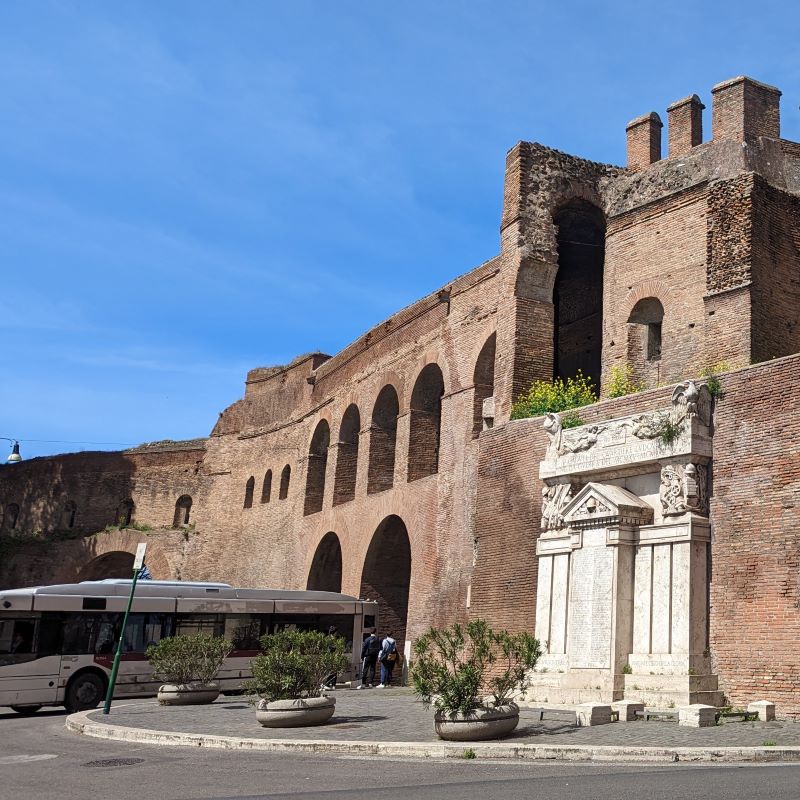
At first, we weren’t sure we would try to navigate the bus system even with my ability to mostly communicate. We are so glad we tried it and it was so good for seeing other parts of the city. The main tourist attractions were walkable from Trastevere but there is plenty to see that is a long walk away. Bus tickets are 1.50€ per ride but we got the 7 day pass so we could ride as often as we wanted during that week. You purchase your bus tickets at the Tabbachhi store (they always have a sign with a big capital T out front). If you buy a paper ticket, towards the back of the bus you will see the machine to stamp it. The bus stops are easy to find on Google maps or just by their large signage on the street. You want to note the stop you get on (for your return trip) then find your destination under the bus number. Google maps is very helpful as it lists the bus number you need for your trip. The system might not be as efficient as an American would expect but it saves your feet and will get you where you need to go. Taxis are also super easy and every one we used accepted credit card but preferred cash. Taxis are always white in Rome.
About the Region:
Lazio is often seen only as the region that holds Rome, but it offers so much more beyond the Eternal City. Of course, Rome itself is reason enough to visit. Walking its streets is like wandering through a living museum, where ancient ruins, Renaissance palaces, Baroque fountains, and bustling piazzas blend seamlessly with modern life. The Colosseum, Vatican City, and Trevi Fountain are icons everyone should see at least once.
But beyond Rome, Lazio’s countryside is filled with surprises. Just an hour away lies Tivoli, home to two UNESCO World Heritage Sites: Villa d’Este with its stunning Renaissance gardens and fountains, and Hadrian’s Villa, the sprawling ancient retreat of Emperor Hadrian. Both are breathtakingly beautiful and often overlooked by travelers.
Further north, you’ll find the medieval hill town of Viterbo, known for its well-preserved historic center and ancient thermal baths. Nearby, Civita di Bagnoregio sits atop a crumbling cliff, accessible only by footbridge, earning it the name “the dying town” – a hauntingly beautiful place frozen in time.
Lazio also boasts volcanic lakes like Lake Bolsena and Lake Bracciano, perfect for a relaxing day of swimming, boating, or dining lakeside at family-run trattorias. The region’s food reflects rustic Roman flavors: hearty pastas like cacio e pepe and amatriciana, and porchetta roasted to perfection.
Visiting Lazio means experiencing the grandeur of Rome and discovering a countryside rich with history, quiet beauty, and authentic Italian life that few tourists ever see.